Morning Light Exposure
Spending a few minutes outside or near a sunny window shortly after waking helps set your body's natural rhythm for the day ahead.

Simple, consistent habits woven into your everyday routine can meaningfully support how you feel and function throughout the day. No overhauls needed — just small, intentional steps.
A handful of small, repeatable actions — practiced consistently — can help you feel more capable and present throughout your day.
Spending a few minutes outside or near a sunny window shortly after waking helps set your body's natural rhythm for the day ahead.
Keeping a water bottle within reach and sipping regularly throughout the day supports focus and helps you feel more alert during work hours.
Brief stretches or short walks between tasks — even just two to three minutes — help release tension and refresh your concentration.
Establishing a consistent pre-sleep ritual — dimming lights, stepping away from screens — helps your body transition toward restful sleep more smoothly.
A few slow, intentional breaths before switching tasks gives your nervous system a brief reset and keeps you grounded during busy days.
Including whole foods — fruits, vegetables, proteins, and healthy fats — in your meals gives your body the steady supply of nutrients it needs to function well.
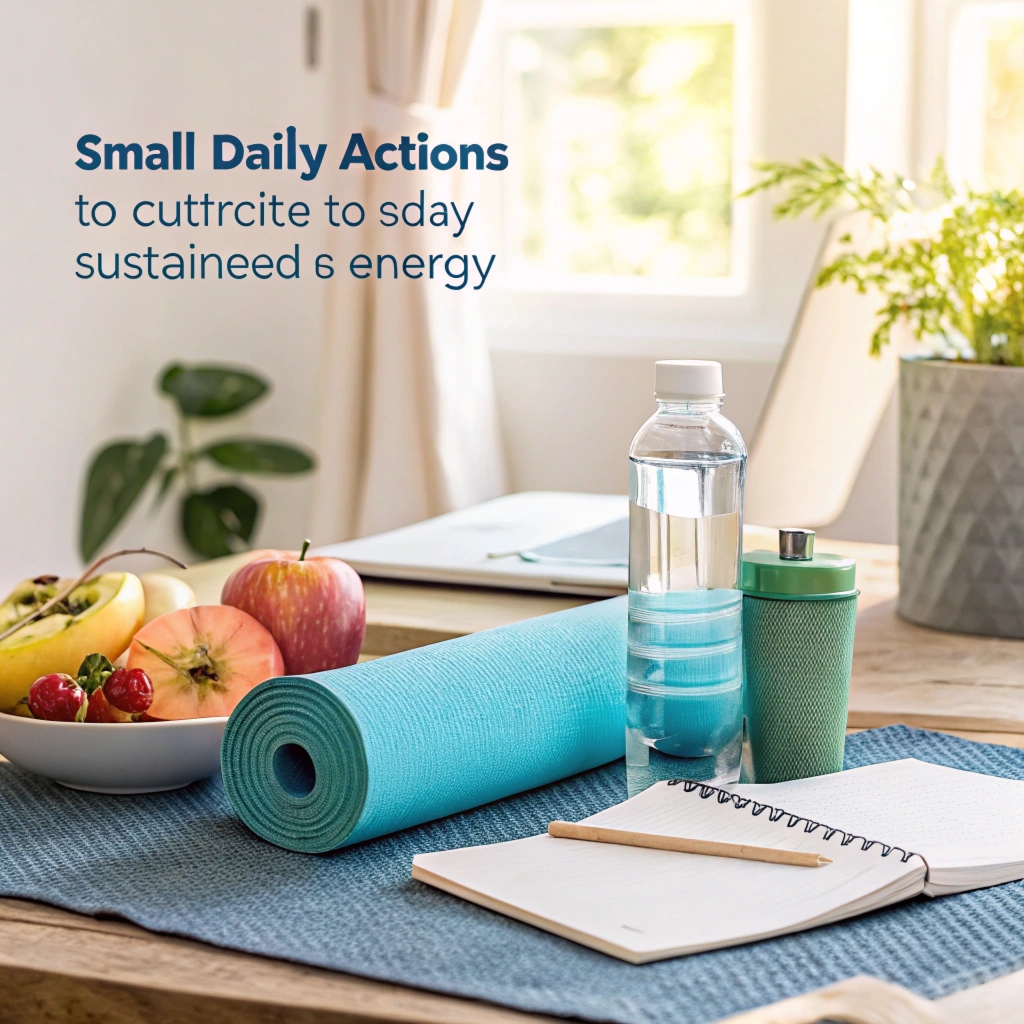
Sustainable routines are built from small, repeatable choices rather than dramatic change. Here is what consistent daily habits may support over time:
Short movement breaks and regular hydration help maintain concentration across longer stretches of activity.
A simple morning routine reduces decision fatigue and makes the start of the day feel more manageable.
Calm evening habits signal to your body that the day is winding down, which can support more restful sleep patterns.
Predictable daily patterns give your day structure, which many people find calming and easier to maintain long term.
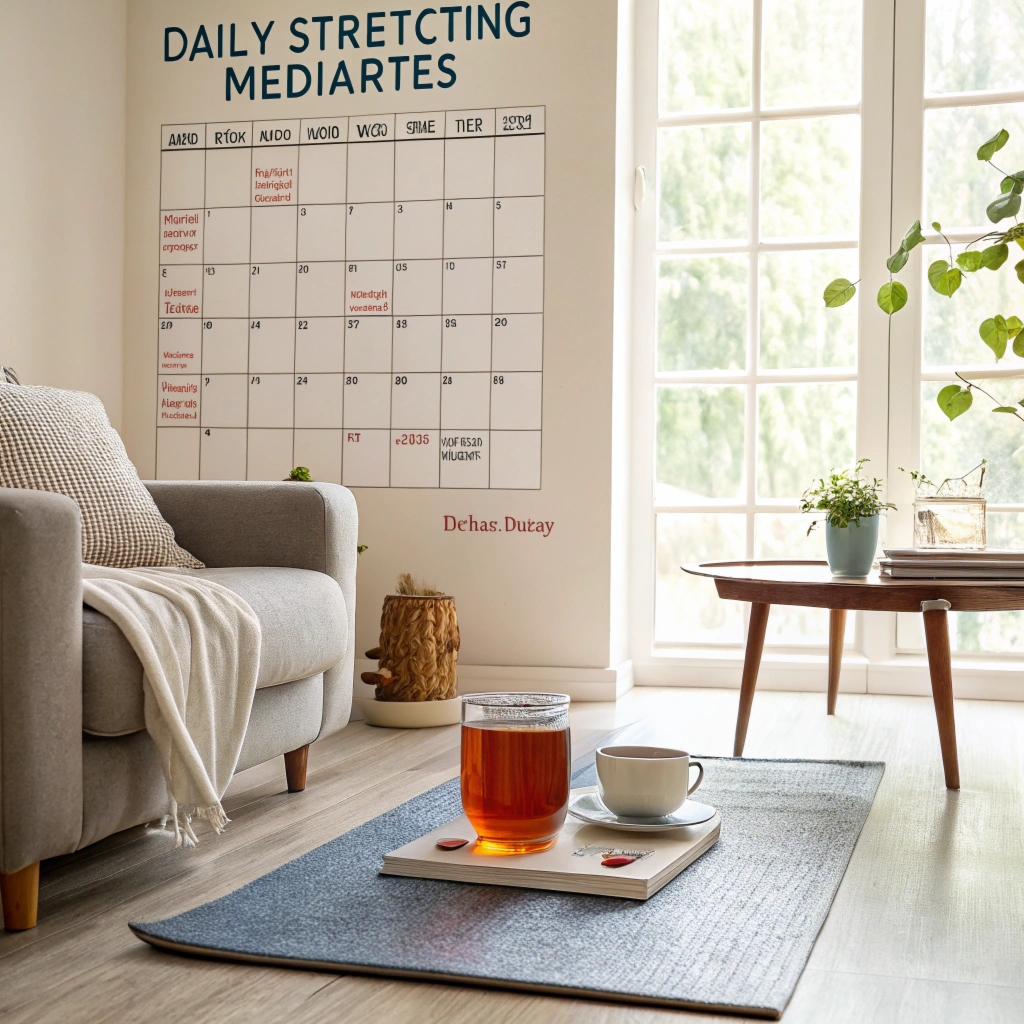
When you want momentum, add one tiny action to your day. Even short consistency can help make your energy feel more steady and reliable.
This is not a rigid programme — it is a flexible framework you adapt to your own schedule and lifestyle. Here is one way to approach it:
Rather than changing everything at once, select one or two habits that feel most relevant to your current routine. Starting small makes it easier to stay consistent.
Attach new actions to things you already do — for example, drinking water while making your morning coffee, or stretching during lunch. This reduces the effort of remembering.
A simple note or app can help you notice patterns over days and weeks. The goal is awareness, not performance — missing a day is a normal part of building any new routine.
Notice what feels sustainable and what does not. Habits that fit naturally into your life are far more likely to continue than ones that require significant extra effort.
Once a habit feels natural, you can layer in another. Most people find a rhythm within two to four weeks of consistent practice, though individual timelines vary.
Set aside a few minutes each month to consider how your routine has shifted. Are there habits that are working particularly well? Are there areas where more support would help?
Minutes per habit, per day — most actions fit easily into an existing schedule
Weeks of consistent practice before most habits begin to feel automatic
Core daily habits that form the foundation of this lifestyle approach
Designed to work anywhere — at home, at work, or while travelling
Straightforward answers to the questions we hear most often — no complicated claims, just honest information.
This varies from person to person. Some people notice that their mornings feel more structured within the first week, while broader changes to daily rhythm often appear after two to four weeks of consistent practice. Individual experiences depend on many factors, including existing habits, sleep, and lifestyle.
No. The habits described here are designed to be low-cost and accessible. A water bottle, some time near natural light, and a willingness to build small routines are all that is needed to get started.
The habits shared here are general lifestyle suggestions suitable for most adults. However, everyone's circumstances are different. If you have specific health concerns, please consult a qualified professional before making changes to your routine. This website does not provide personalised advice of any kind.
Missing a day is a normal part of building any routine. The goal is not perfection — it is direction. Simply resuming where you left off, without self-criticism, is the most effective approach. Over time, even an imperfect routine adds up to meaningful consistency.
Absolutely. These habits are designed to complement, not replace, whatever structure you already have. Many people find that adding one or two of these actions to routines they already follow is the easiest and most sustainable way to begin.
We focus on small, evidence-informed habits rather than large-scale programmes or guaranteed outcomes. There are no promises of specific results — only practical information about actions that many people find helpful for structuring their day. The emphasis is on sustainability over intensity.
Have a question about the habits, the approach, or anything else? Send us a message and we will get back to you soon.
Small steps, taken consistently, lead to meaningful shifts in how your days feel. Start with just one habit today.
Start Supporting Your Energy Today